Clean Energy Solutions Index: Bridging the "Perception Gap"

The Challenge
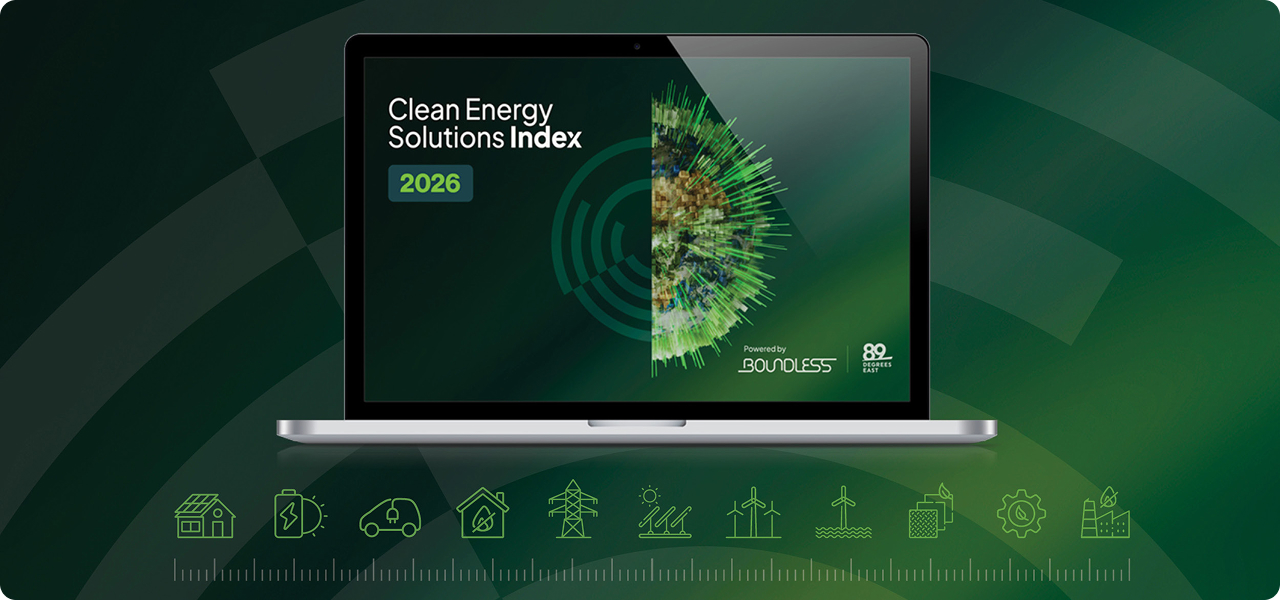
89 Degrees East and Boundless Earth created the Clean Energy Solutions Index, now in its second annual wave of research. Moving Australia beyond the climate wars, the Clean Energy Solutions Index provides the evidence leaders need to accelerate Australia’s clean energy transformation. The Index demonstrates that deep support for clean energy solutions is growing in Australia. In 2026, the economic case is increasingly central to that support: Australians show the deepest support for solutions that lower energy costs and strengthen Australia’s energy independence.

Our REsponse
The Index measures deep support for 11 clean energy solutions across three categories: Home Solutions, Infrastructure Solutions and Industry Solutions. The support score for each solution is calculated using four key metrics: personal support, belief in national benefit, perception of local support and willingness to advocate. Further insights into barriers and opportunities to grow support are derived from non-Index data collected in the survey. A support score of 70 or higher indicates strong social licence, and shows where mandates can be reinforced or where action is needed to grow support.

More than 9,000 Australians have taken part across the pilot and the two published waves. The 2026 wave covers 11 solutions, six states and every major demographic cut, released as a free public report, a media release and an open interactive dashboard.
For the first time the Index can track change. National deep support sits at 61 out of 100, up one point on 2025. Electric vehicles recorded the largest single-year gain of any solution, up 6 points to 50, and renewable energy transmission rose 5 points to 61. State scores run from 69 in Tasmania to 58 in Queensland. Policymakers, funders and industry now have year-on-year evidence of which solutions are gaining ground and which are stalling. At 61 out of 100, the national Index score has moved in the right direction since 2025. With deep support holding firm or growing across the majority of solutions and most states, the conditions for continued uplift toward a score of 70 are in place.
Deep support follows the household budget. The solutions Australians back hardest are the ones with a visible financial benefit: home solar at 82 and batteries at 75. Gas-free home conversion sat flat at 48. Support rose even as the share of Australians calling climate change personally important dipped from 80% to 78%. Cost of living and energy security are now doing work environmental concern once did on its own. At 61 nationally, deep support still sits below the 70 needed for genuine social licence.


Insights
'“This is the second annual report of the Index, and it represents a significant milestone. For the first time, the Index can do what it was always designed to do: track change. Year-on-year comparison reveals not just where Australians stand, but which way they are moving."
– Dr Rebecca Huntley, Director of Research, 89 Degrees East
Learn more:
- Download the 2026 Clean Energy Solutions Index report.
- Use the interactive CESI dashboard comparing 2025 and 2026 by solution, state and demographic.
- Visit cleanenergysolutionsindex.com.au, including key findings, how-to-use guides and FAQs.
- Read ongoing news and insights articles drawing on the Index data.
- Find tailored briefings for policymakers, industry and advocates.
DOWNLOAD REPORTS