How extreme weather is reshaping frontline care work


The Challenge
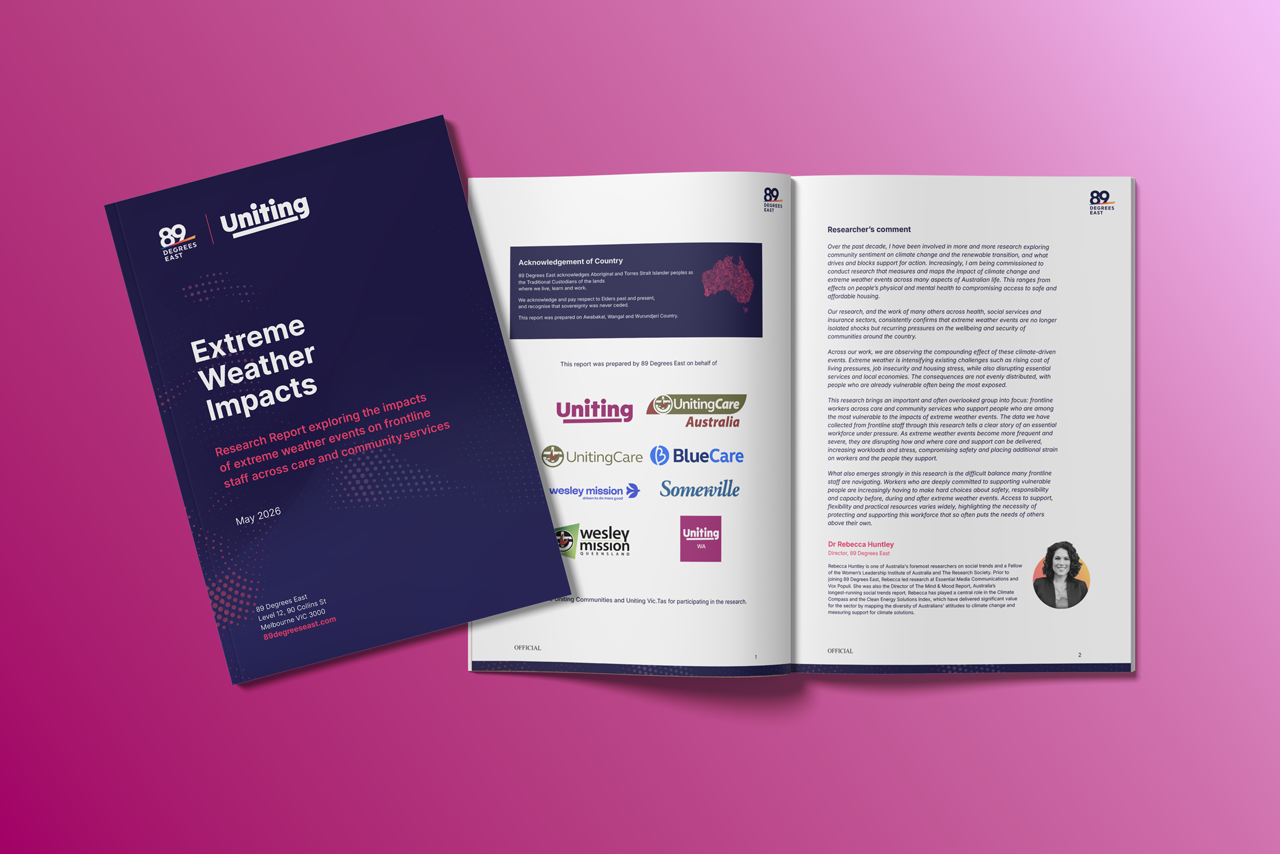
Extreme weather events are increasing in frequency and severity across Australia, and the people who rely on care and community services are among the most exposed. So are the workers who support them. UnitingCare Australia and Uniting NSW.ACT jointly engaged 89 Degrees East to find out how heatwaves, bushfires, floods, storms and cyclones are affecting frontline workers in care and community services and the people they support. The National Climate Risk Assessment 2025 warns that health and social support services will come under strain as these events intensify, but the sector had little hard data of its own. The goal was to build the evidence base from workers themselves, in their own words.

Our REsponse
Uniting NSW.ACT and the UnitingCare network distributed the survey to frontline staff using convenience sampling. Participation was voluntary and anonymous, and data was de-identified before analysis.

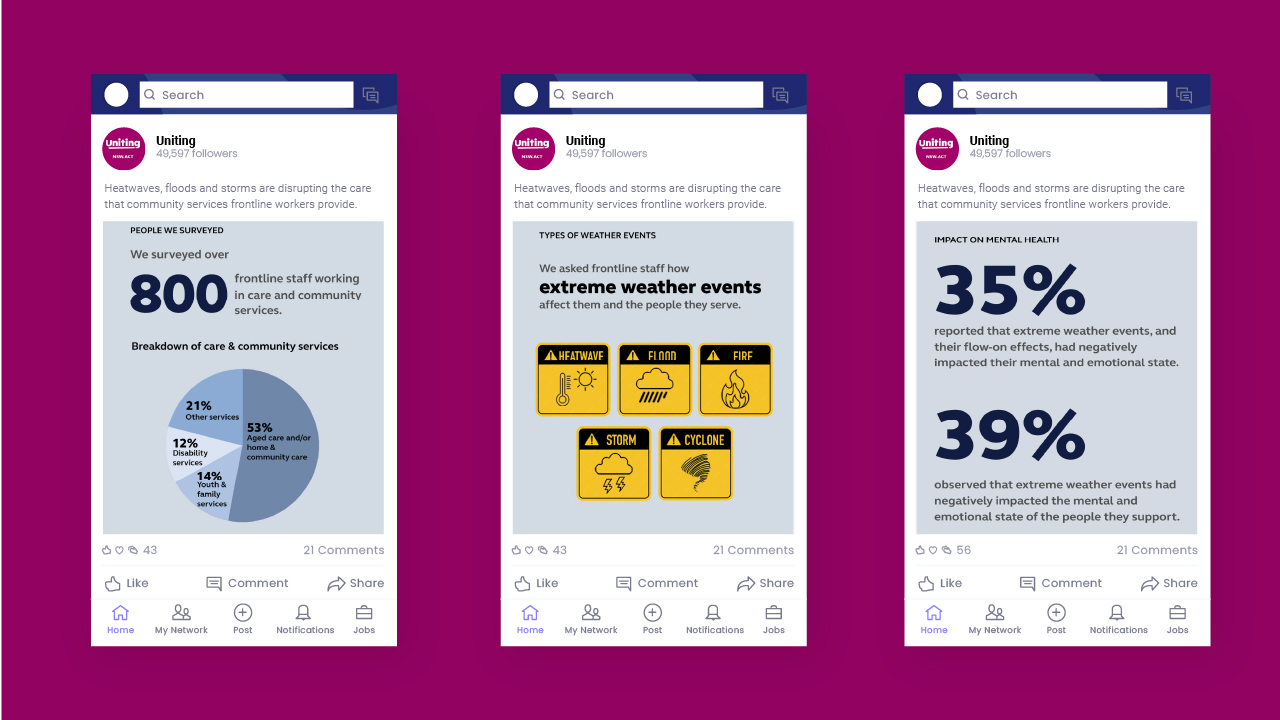
The survey was distributed by Uniting NSW.ACT and organisations in the UnitingCare Australia network to frontline staff across care and community services. These organisations included Uniting Communities (SA), Uniting WA, Wesley Mission (NSW,ACT), Wesley Mission Queensland, Somerville Community services (NT) and others. More than half the respondents (53%) worked in aged care or home and community care. Most were based in Queensland (45%) or New South Wales (37%), with 14% working in rural or remote areas.
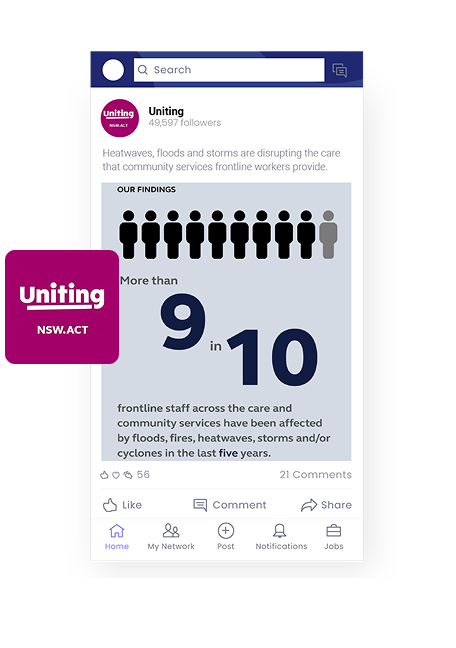
The research gives the UnitingCare Australia network and Uniting NSW.ACT a national evidence base of 829 frontline voices to take to government. It puts numbers to what the sector had only anecdotal evidence for: 91% affected by extreme weather in the past five years, 47% feeling more financial pressure at home, and 44% reporting increased stress at work during extreme weather events. The findings support the case for policy change and signal the need for resources and solutions that would let care and community services adapt and protect both staff and the people they support.

Insights
Frontline workers across care and community services who support people who are among the most vulnerable to the impacts of extreme weather events. More than 9 in 10 frontline staff (91%) have been affected by floods, fires, heatwaves, storms or cyclones in the last five years, and 97% are concerned about the impact of these events on the people they support. Close to a third (32%) have felt conflicted about whether to put clients’ needs before their own. The findings also point to what helps: flexible work arrangements, supportive management and adequate resourcing measurably reduce the impact on staff and on service delivery.
DOWNLOAD REPORTS