
Mental Health Compass: Australians and the issue of mental health


The Challenge
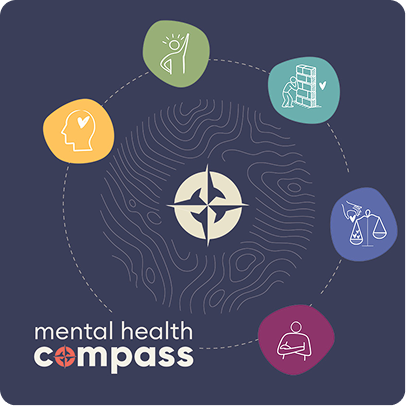
How are Australians engaging with the issue of mental health? Australians for Mental Health engaged 89 Degrees East to build the Mental Health Compass, a tool to help advocates raise issue salience and build support for change. Mental ill-health is rising, against a backdrop of declining social cohesion, loneliness, cost-of-living pressure, housing insecurity and the aftershocks of the pandemic. Existing research has focussed on prevalence, causes, services and barriers to support. Far less is known about how Australians feel about mental health as a social issue, the solutions they want, and their willingness to act. So rather than sorting people by support, awareness or demographics, the Compass uses audience segmentation to capture the more nuanced ways people think, feel and behave on the issue.

Our REsponse
89 Degrees East designed and ran a nationally representative online survey of 3,019 Australians aged 18 and over. Responses were collected between July and August 2025 and weighted to represent the national population by age, gender and location, in line with ABS, 2021. The survey captured attitudes, experiences and behaviours relating to mental health, plus demographics and media consumption. Principal Component Analysis and k-means clustering of the attitudinal data identified five distinct audience segments: Empowered Optimists, Compassionate Onlookers, Discouraged Battlers, Conditional Sympathisers and Minimising Resistors. The segments differ most in engagement, beliefs about the mental health system, and views on personal versus collective responsibility.

The survey covered 3,019 Australians aged 18 and over, weighted to the national population by age, gender and location. The five segments give advocates, government, business, researchers and NGOs a shared language and framework for aligning engagement and targeting messaging.
Australians are diverse in their views and experiences, ranging from Empowered Optimists (23%) to Minimising Resistors (15%). Most value mental health, seeing it as just as important as physical health (88%), and many believe the crisis can be fixed with the right investment and leadership (76%). The Compass gives advocates a baseline of national sentiment and five clearly defined segments to engage. The challenge is turning passive support into active support.
Most Australians already value mental health; the challenge is moving them from support in principle to support in practice. The Compass shows a large, moveable middle who believe mental health matters and that the crisis can be solved, but who are not yet actively engaged. Reaching them means meeting each segment with language and solutions that fit their values and experiences. As a lasting resource for government, business, academics, NGOs, unions and advocacy groups, the Compass also provides a common language for cross-sector collaboration and a baseline for tracking how sentiment shifts over time.

Insights
Mental Health Compass: Introducing the Segments. A national report profiling the five audience segments and how each thinks, acts and feels about mental health as a social issue - download below.
Read more about Australians for Mental Health here.
DOWNLOAD REPORTS