Community Compass: Australia's views and engagement with the community sector


The Challenge
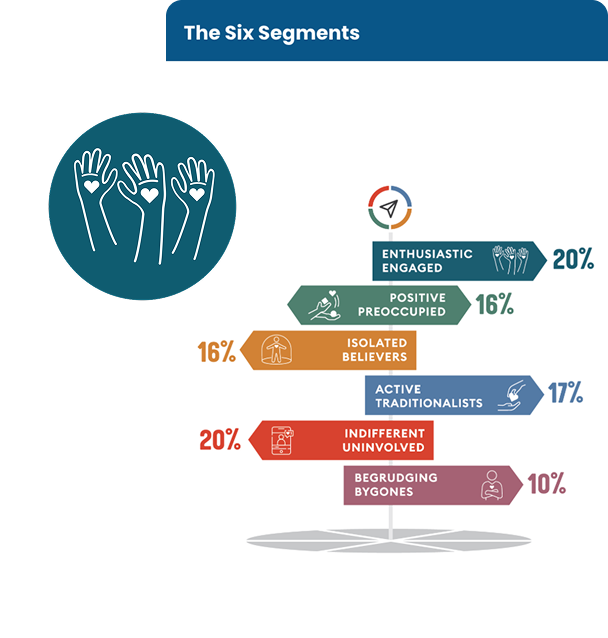
How do Australians really think about, value and engage with the community sector? Social cohesion is under pressure, with declining participation in community and civic groups, falling trust in institutions, and cost-of-living pressures straining households. Community organisations play a critical role in filling gaps left by government and the private sector, while strengthening connection and belonging. Our Community and the Community Council for Australia needed deeper insight into community attitudes and behaviours, as previous research lacked the audience detail needed to inform effective engagement strategies. The Community Compass is an audience segmentation that maps the diversity of Australians’ relationships with the community sector and equips community organisations to mobilise different groups.

Our REsponse
89 Degrees East ran a national online survey of 3,071 Australians aged 17 and over, representative by age, gender and location. Data was collected through the Online Research Unit (ORU) panel and analysed by CPS Insights. The segmentation drew on 39 attitudinal statements covering connection to community, views on the sector's role and broader social beliefs. The analysis extracted seven underlying factors, then clustered respondents into six distinct segments. A profile was produced for each segment, covering demographic composition, habits, levels of engagement and key attitudinal differences. Led by Dr Rebecca Huntley and Holly McCarthy (89 Degrees East), with support from Chris Strods (CPS Insights).

The survey covered 3,071 Australians aged 17 and over, representative by age, gender and location. The six-segment model gives organisations across the sector a shared framework for targeting messaging and engagement, and the report was published publicly with a foreword by the Assistant Minister for Charities.
The Community Compass gives the sector a common framework: six clearly defined segments, for engaging and communicating with different parts of the community. It also set a baseline of sentiment. 71% believe community organisations make the world a better place and 59% support more government funding, evidence the sector can use to advocate for resources and reform.

Insights
When it comes to the community sector, values are often at odds with behaviour. Most Australians value the sector and want to see it thrive, yet many who would like to be more involved face barriers. Support is broad but uneven. Meeting people where they are, segment by segment, is how the sector turns goodwill into genuine engagement. The Compass gives community leaders a shared language for talking about their audiences and a baseline they can track over time, so they can tailor engagement, target advocacy and build support at a time when social cohesion and trust in institutions are under real strain.
DOWNLOAD REPORTS